New Today

Calculate and Learn about Percentages with Percentage Calculator
Wesley Fryer, Moving at the Speed of Creativity, January 27, 2012.


Honestly, you shouldn't need a calculator to be able to figure out percentages. It's easy. I'll show you how, where a small number (say 13365) is a percentage of a big number (say 456312):
- Divide your big number by 100. Eg. if it's 456312 you now have 4563.
- How many times does that go into your small number? Eg., how many times does 4563 go into 13365?
- If that's too difficult, divide each number by 10 and round off until it becomes simple. How many times does 456 go into 1336? Still too hard? How many times does 46 go into 137? Still too hard? How many times does 5 go into 14? Just under 2.5.
- Sure, it's a bit ballpark, because of the rounding (the actual percent in the example is 2.93 percent, which is actually near the outer edge of the margin of error for this method). But you can do it in about 5 seconds in your head.
- if you need more precision, proceed stepwise, calculating 1 significant digit each time you divide by 10, and keeping the remainer for the next step. Like so: 4563 goes into 13365 2 times; 456 goes into the remainder (4339) 9 times, etc., giving you 2.9

[Direct Link] [Comment]

Share |


files/images/edu-widget.jpg, size: 82296 bytes, type:  image/jpeg
A WordPress Widget Perfect For Building Your PLN
Jeff Dunn, Edudemic, January 27, 2012.


I'm not really a WordPress user but if I were I'd probably be looking at "a widget that displays a curated list of your favorite education blogs and websites." It's created by Dell Marketing. Hm. Maybe I wouldn't be so interested. "The widget has a special crawler that goes to a pre-set list of education blogs that are selected based on content quality. It then takes the title of the latest articles written by that blog and populates the widget sitting on the installer’s website." I had a look at the code; it's pretty elegant. I sometimes regret not joining the PHP-WordPress world because it would have been fund to code add-ons like this.

[Direct Link] [Comment]

Share |


UStream Broadcasts from EduCon 2.4
Chad Sansing, Cooperative Catalyst, January 27, 2012.


This looks like a fun time for people over the weekend: "This weekend several Coöp folks and National Writing Project (NWP) friends will meet-up and facilitate conversations at EduCon 2.4 which is a conference that aims to host conversations about technology in service of learning, learning spaces, and learners (I think)." Christina Cantrill, Paul Oh, Kirsten Olson and Chad Sansing are hosting a conversation called Permission to Speak on Saturday while Mennoo Rami and Chad Sansing will host a hack jam on Sunday, January 29th. The UStream channel is here.

[Direct Link] [Comment]

Share |


iPads For All: One Sales Team's Story
Chris Murphy, Information Week, January 27, 2012.


I have a sense this is moving a lot more rapidly than people realize. For example, "Level 3 Communications just gave iPads to its 1,300 North American salespeople and sales engineers.... Level 3's sense of urgency is a reminder of just how fast tablets are moving into mobile workers' lives. 2011 was the year of pilot tests. 2012 is the year companies will roll out iPads by the thousands to entire sales and service teams, packing them with purpose-built business applications, not just generic email, browsers, and off-the-shelf productivity apps." It's what we always expected of mobile computing - I remember talking up a project to do this sort of thing for engineers in 1999 - but it took tablet-sized devices and ubiquitous internet to actually do it.

[Direct Link] [Comment]

Share |


It Looks Like College Students are the Majority of Google+ Users
Kyle James, .eduGuru, January 27, 2012.


Something called PlusDemographics is asserting that Google_ users are mostly young, mostly male and mostly students. Kyle James observes, "The one piece of data that this report doesn’t share is user engagement with the service. Facebook claims more than 800 million “active” users with more than 50% of these active users logging in on any given day. Google+ has 90 million user accounts, but how many of them are actually active?" To me, the most interesting part was the breakdown of how many Google+ users are active on other services. It's arguable that Google+ is reaching a new demographic not currently servered by other services, not even Facebook. I can see that; Google+ reaches out to me in a way these other sevrices do not.

[Direct Link] [Comment]

Share |


Connectivism and Connective Knowledge 2012
Stephen Downes and George Siemens, CCK12, January 26, 2012.


For those of you who never had the opportunity, or those of you who want to relive the dream, George Siemens and I are offering yet another iteration - our fourth! - of Connectivism and Connective Knowledge. This has been the smoothest launch of the gRSShoper technology yet (and it has been equally smooth for our sister course, Learning Analytics). Our first live online session is tonight at 8:00 p.m. eastern - more information here and if you want you can sign up here. So we're looking forward to welcoming you whether you're an old hand or brand new to the process.

[Direct Link] [Comment]

Share |


files/images/Solar_Powered_OLPC.PNG, size: 349073 bytes, type:  image/png
Video of an XO-1.75 Directly Running Off a 10W Solar Panel
Christoph Derndorfer, OLPC News, January 26, 2012.


As the title suggests, this is a video showing an OLPC computer running directly off a solar panel. They suggest it might be the first computer able to run directly off a solar panel. The process is demonstrated with a 10 watt solar panel. In case you're wondering (I was) a 10 watt solar panel costs between $50 - $150. As can be seen here. And they make a good argument in the video about why they're still producing computers when tablets are so cheap now - they are pushing the envelop on power usage and screens that can be used in bright sunlight. Good points, both. Oh, and just for contract, it takes around 80 watts to power a MacBook Pro.

[Direct Link] [Comment]

Share |


‘Open space rewards consensus and punishes dissent’
jenny Mackness, Jenny Connected, January 26, 2012.


Interesting commentary about open spaces and dissent, following from some of Dave Snowden's comments in #Change11. As an aside - I don't get where this view that I have some kind of authority comes from. I have no authority. My academic credentials are from another field, and are inadequate anyways. I supervise zero people. I don't issue grades, pass or fail people, or impact their career prospects in any way. In theory I could maybe block some people from using one of my websites, but in practice I don't, and a determined person could probably get around any sanctions I would apply. The only authority whatsoever that I have comes from the weight of my words - and even then, I frequently remind people to disregard them, to weight their own opinions, and write their own words (preferably on their own website outside my scope and control). All this is in its own way a good thing. Because to the extent that I am in a position to punish dissent, I am weakened.

[Direct Link] [Comment]

Share |


Links and Resources

(presentations include slides and audio recordings)
Videos: http://www.downes.ca/me/videos.htm
RSS Feed: http://www.downes.ca/news/OLDaily.xml
Podcast: http://www.downes.ca/news/audio.xml

Key Articles

Scholarly Articles

Cites:294 Educational Blogging (Local copy)
264 Learning objects: Resources for distance education worldwide (Local copy)
134 E-learning 2.0 (Local copy)
126 Models for sustainable open educational resources (Local copy)
88 The future of online learning (Local copy
75 Learning networks and connective knowledge (Local copy)
70 Design and reusability of learning objects in an academic context: A new economy of education (Local copy)
59 Resource profiles (Local copy)
40 Learning networks in practice (Local copy)
33 Semantic networks and social networks (Local copy)
35 An introduction to connective knowledge (Local copy)
27 Design, standards and reusability (Local copy)
23 EduSource: Canada's learning object repository network (Local copy)
22 An introduction to RSS for educational designers (Local copy)

(Cites from Google Scholar for an H-Index = 14)

Recent Popular Articles

The Purpose of Learning, February 2, 2011.
The Role of the Educator, December 6, 2010.
Deinstitutionalizing Education, November 5, 2010.
Agents Provocateurs, October 28, 2010.
What Is Democracy In Education, October 22, 2010.
A World To Change, October 19, 2010.
Connectivism and Transculturality, May 16, 2010.
An Operating System for the Mind, September 19, 2009.
The Cloud and Collaboration, June 15, 2009.
Critical Thinking in the Classroom, June 5, 2009.
The Future of Online Learning: Ten Years On, November 16, 2008.
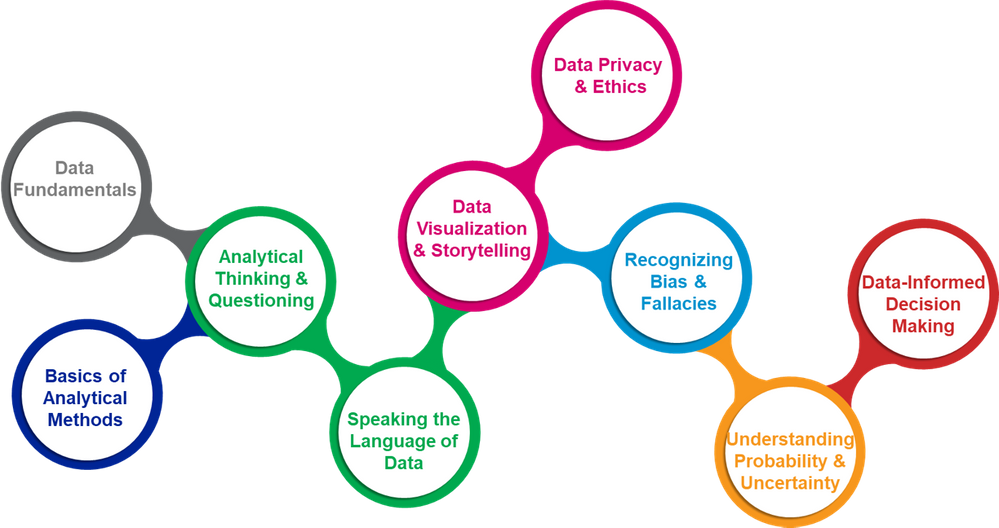
Things You Really Need to learn: http://www.downes.ca/post/38502

Social Network

Twitter: http://twitter.com/downes
Slideshare: http://www.slideshare.net/Downes/
Facebook: http://www.facebook.com/downes
Flickr: http://www.flickr.com/photos/stephen_downes/
Google: http://www.google.com/profiles/sfdownes
Blip.tv: http://downes.blip.tv/
Contact: stephen@downes.ca Stephen.Downes@nrc-cnrc.gc.ca
Skype: Downes


About Stephen Downes

Stephen Downes is a senior researcher for Canada's National Research Council and a leading proponent of the use of online media and services in education. As the author of the widely-read OLDaily online newsletter, Downes has earned international recognition for his leading-edge work in the field of online learning. He developed some of Canada's first online courses at Assiniboine Community College in Brandon, Manitoba. He also built a learning management system from scratch and authored the now-classic "The Future of Online Learning".

At the University of Alberta he built a learning and research portal for the municipal sector in that province, Munimall, and another for the Engineering and Geology sector, PEGGAsus. He also pioneered the development of learning objects and was one of the first adopters and developers of RSS content syndication in education. Downes introduced the concept of e-learning 2.0 and with George Siemens developed and defined the concept of Connectivism, using the social network approach to deliver open online courses to three thousand participants over two years.

Downes has been offering courses in learning, logic, philosophy both online and off since 1987, has 135 articles published in books, magazines and academic journals, and has presented his unique perspective on learning and technology more than 250 times to audiences in 17 countries on five continents. He is a habitual photographer, plays darts for money, and can be found at home with his wife Andrea and four cats in Moncton, New Brunswick, Canada.

Vision Statement

I want and visualize and aspire toward a system of society and learning where each person is able to rise to his or her fullest potential without social or financial encumberance, where they may express themselves fully and without reservation through art, writing, athletics, invention, or even through their avocations or lifestyle.

Where they are able to form networks of meaningful and rewarding relationships with their peers, with people who share the same interests or hobbies, the same political or religious affiliations - or different interests or affiliations, as the case may be.

This to me is a society where knowledge and learning are public goods, freely created and shared, not hoarded or withheld in order to extract wealth or influence. This is what I aspire toward, this is what I work toward.


Canadians who gave their lives in service in Afghanistan

Hundreds of my IAAF Track & Field Photos from Moncton 2010

My calendar